The Steelers’ Surreal Day Around Aaron Rodgers’ Interview
The Steelers’ Surreal Day Around Aaron Rodgers’ Interview
The story surrounding Aaron Rodgers’ appearance on The Pat McAfee Show cannot be reconstructed responsibly from the supplied material.
The source package contains unrelated titles and numerical values but no Athletic article URL, publication date, transcript, video, team statement, quotations, roster information, or timeline. It therefore does not establish what happened before Rodgers’ interview, what he said, how the Pittsburgh Steelers responded, or whether the appearance affected the team’s football operations.
That limitation matters. Rodgers’ public comments often generate immediate headlines, but the difference between a confirmed statement and an online interpretation can define an entire NFL news cycle. Without the original interview or reliable supporting reports, claims about the Steelers’ reaction would be speculation.
The Day Before the Interview
A credible reconstruction would identify the date, location, and Steelers activity before Rodgers appeared on McAfee’s program. It would show whether Pittsburgh practiced, held meetings, traveled, hosted media availability, or prepared for another football obligation. It would also identify the players and coaches who spoke publicly.
The supplied material provides none of those details. It cannot establish whether the Steelers followed a routine offseason schedule, prepared for a game, evaluated quarterbacks, or handled another roster matter when attention turned to Rodgers.
The same problem applies to reports that may have preceded the interview. A verified account could include a Rodgers social-media post, a McAfee announcement, a television segment, a reporter’s information, or comments from Steelers personnel. No such material appears in the source package.
Rodgers’ connection to Pittsburgh also requires verification. The article would need to establish whether he was a Steelers player, a prospective player, a former player, a commentator, or an outside figure discussing the team. It would also need to identify the relevant season and the status of Pittsburgh’s quarterback room.
Aaron Rodgers Appears on The Pat McAfee Show
The Pat McAfee Show is a prominent platform for NFL news because it combines a large audience with a conversational format. Interviews can be informal while still producing statements that receive national coverage.
That combination makes context essential. A guest may answer a broad question with conditional language, personal opinion, or humor. Short clips can then circulate without the surrounding exchange. Headlines may present an open possibility as a commitment or turn a general compliment into evidence of recruitment.
The supplied sources do not identify the date of Rodgers’ appearance, the program segment, the interview format, McAfee’s questions, or Rodgers’ answers. They provide no transcript or video link.
No quote can be responsibly attributed to Rodgers from the available material. The sources do not establish whether he expressed interest in Pittsburgh, rejected a possibility, discussed a roster decision, or criticized the media.
Exact wording matters. “I would consider it” does not mean “I have agreed.” “I like those players” does not mean “they recruited me.” “I do not know” does not confirm or deny a negotiation.
The absence of a verified transcript also prevents a reliable account of what Rodgers did not say. It is unknown whether he made a formal commitment, rejected a possibility, left his future open, or avoided the subject entirely.
The Steelers’ Response Is Unknown
The original Athletic article may have described reactions from Mike Tomlin, Steelers players, executives, or Rodgers’ representatives. The supplied sources contain none of those responses.
It is therefore impossible to state whether the Steelers issued a statement, answered questions, declined comment, or redirected attention to football. Silence cannot be interpreted as agreement, disagreement, or confirmation.
The same standard applies to Rodgers’ representatives. Their involvement should not be assumed merely because Rodgers appeared on a program.
The outline also calls for a reconstruction of the questions Steelers players and coaches faced after the interview. That section would require transcripts, video, or reliable reporting. Invented dialogue would distort the episode, and even paraphrased answers require sourcing because a brief response can carry a different meaning in full context.
Public Noise and Team Business
The central analytical question is whether Rodgers’ interview changed football operations or only changed the public conversation.
A team may continue with practice, game planning, medical work, roster evaluation, and contract discussions while outside attention focuses on a single interview. Conversely, a public appearance can expose or accelerate an internal decision already under consideration.
The available material cannot determine which situation applied to Pittsburgh. A responsible article would separate reported developments from analysis. It could state that the team held a scheduled practice if that was documented, but it could not infer a roster move from online reaction alone.
What Happened the Day After?
A major interview often continues into a second news cycle. Television panels revisit the comments, radio hosts debate their meaning, social-media accounts circulate clips, reporters seek clarification, and fans treat speculation as evidence of momentum.
The supplied sources do not track any of those developments. They do not identify follow-up reports, reactions from Steelers personnel, statements from Rodgers, or a confirmed transaction. Repetition is not independent confirmation: ten outlets repeating the same clip do not create ten separate sources.
The team’s next concrete football activity would provide the clearest measure of the interview’s practical importance. A verified follow-up could identify Pittsburgh’s next practice, opponent preparation, injury report, roster move, or media availability. It could show whether the organization addressed Rodgers directly or continued with its existing schedule.
Without that information, the article cannot state whether the interview changed football operations. The evidence supports only a narrower conclusion: the supplied source package does not document such a change.
What the Episode Reveals About NFL News
An interview can become a news event without being a formal team announcement. Rodgers’ profile, the reach of McAfee’s program, and the speed of online distribution can turn a conditional answer into a national storyline within minutes.
That reach increases the responsibility of reporters and readers. Coverage should distinguish:
- “Could” from “will.”
- Interest from agreement.
- Praise from recruitment.
- A possibility from a plan.
- A joke from a formal statement.
- A player’s opinion from a team decision.
The complete timeline matters more than a viral clip:
- What happened before the interview?
- What did Rodgers actually say?
- How did the Steelers respond?
- What changed afterward?
Those questions determine whether the interview influenced football decisions or simply dominated public attention for a day.
Conclusion
The Steelers’ supposed surreal day may have involved ordinary football business colliding with national attention surrounding Aaron Rodgers’ appearance on The Pat McAfee Show. That contrast would explain the appeal of the story: a controlled team environment met an independent media platform, a high-profile quarterback, and an audience seeking definitive answers.
The supplied material, however, does not establish the underlying facts. It contains unrelated source titles and numerical values, not the Athletic article, interview transcript, team statements, or follow-up reporting.
The confirmed conclusion is limited. No reliable timeline, quotation, Steelers reaction, or football consequence can be attributed to the available sources. Rodgers’ interview may have created attention and questions, but only verified statements and subsequent football decisions can establish its significance.
FAQ
What did Aaron Rodgers discuss on The Pat McAfee Show?
The supplied material does not identify the interview’s topics or provide a transcript. Rodgers’ comments about the Steelers, his football future, or NFL personnel must be verified against the full interview.
How did the Steelers respond?
No verified Steelers response appears in the supplied sources. It is not possible to state whether Mike Tomlin, players, executives, or team representatives answered questions or issued a statement.
Did Rodgers confirm that he would join or leave the Steelers?
No confirmation can be established from the supplied material. A definitive answer requires Rodgers’ exact wording and subsequent reporting from the Steelers or another reliable source.
Did the interview change the Steelers’ football operations?
The source package does not identify the team’s next practice, media availability, game preparation, or personnel development. It cannot establish whether the interview changed football operations or mainly affected public discussion.
Why was the episode described as surreal?
The characterization may refer to the contrast between routine Steelers business and the national attention surrounding Rodgers’ interview. The supplied sources do not document who used that description or the events behind it.
Related Articles
-
 Michigan RB's Career Game vs Packers: What's Verified
-
 Week 12 Fantasy Football QB, TE, DEF and K Rankings
-
 What Every NFL Team Should Be Thankful for in 2026
-
 Aaron Rodgers Steelers Release: What We Know
-
 Brock Purdy Injury Update: Status vs. Seahawks
-
 LSU Expulsion Vote Ruling Remains Unverified
-
 Murray Powers Nebraska to Reported Big Ten Title
-
 Rams vs. Packers Week 12 Highlights: Corum, Forbes Shine
-
 15 Questions About Rodgers and McCarthy’s Messy Breakup
-
 Michigan’s Trev Alberts Debacle Exposes Governance Failures
-
 Anthony Smith Charges Dismissed After July Arrest
-
 Packers-Rams Playoff Simulator: Why the Stakes Are Huge
-
 Geno Auriemma Rips UConn After South Carolina Loss
-
 What CFP Rankings Got Wrong About Indiana, Alabama and UCLA
-
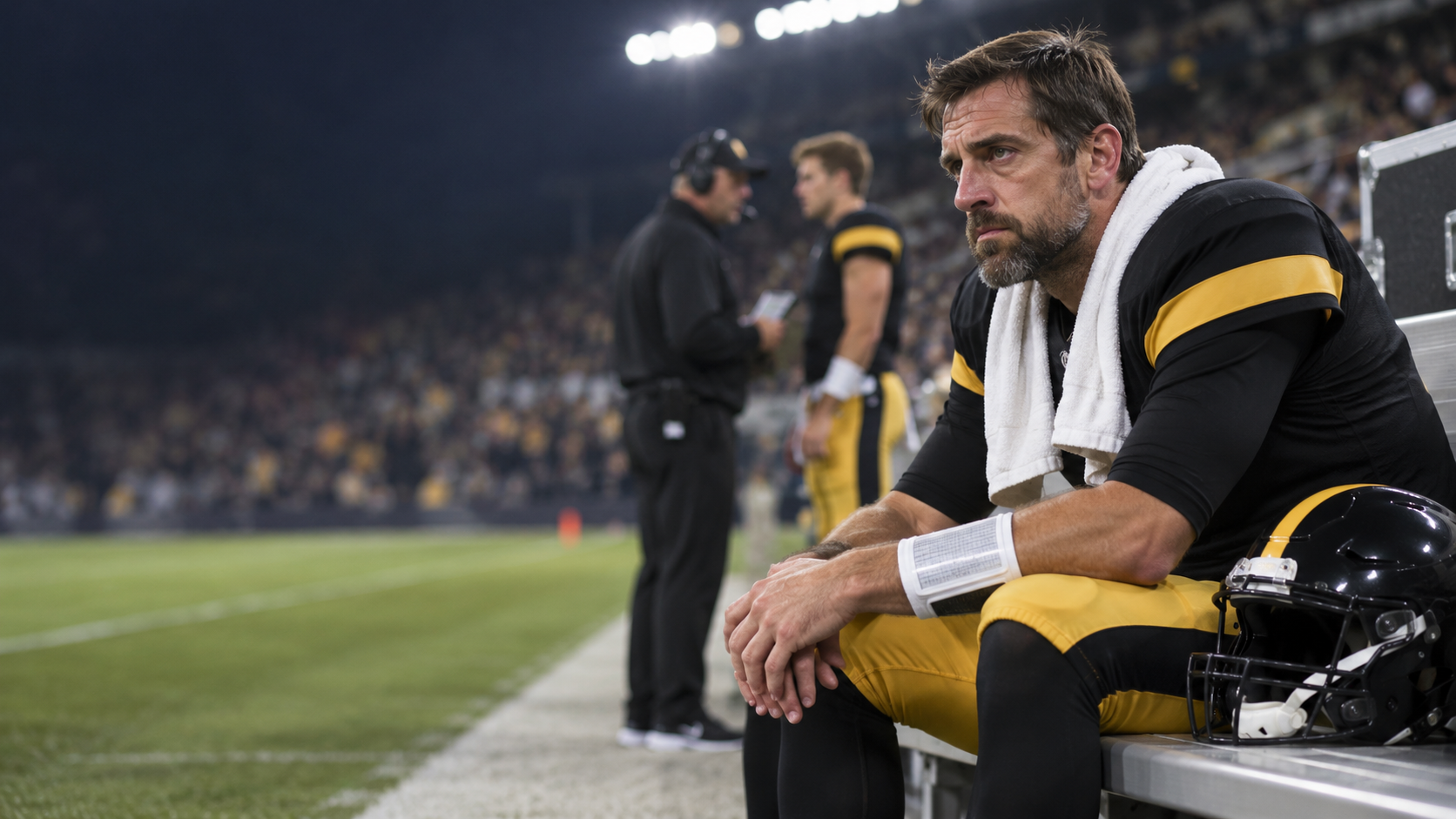 Aaron Rodgers Rumors Grow After Steelers Bench Him
-
 2027 NFL Mock Draft: Jets Target QB, Not Arch Manning